
Simultaneously Identify Conditions Resilient to Variability and the Design Space with the QbD Process Development Function
Estimating the Design Space Requires Significant Effort and Cost
In conventional development processes, determining production conditions has faced two primary challenges:
1. Performance becomes unstable and difficult to reproduce even with slight variations in experimental conditions or during scale-up.
2. Understanding acceptable operating ranges and the design space—including interactions among parameters—requires enormous effort and time.
As a result, conditions obtained early in development often could not be applied at the practical stage, leading to rework in later development phases and driving up lead times and costs.
Simultaneously Perform Tedious Condition Screening and Design Space Estimation with the New “QbD Process Development Function” — Dramatically Shortening R&D Timelines
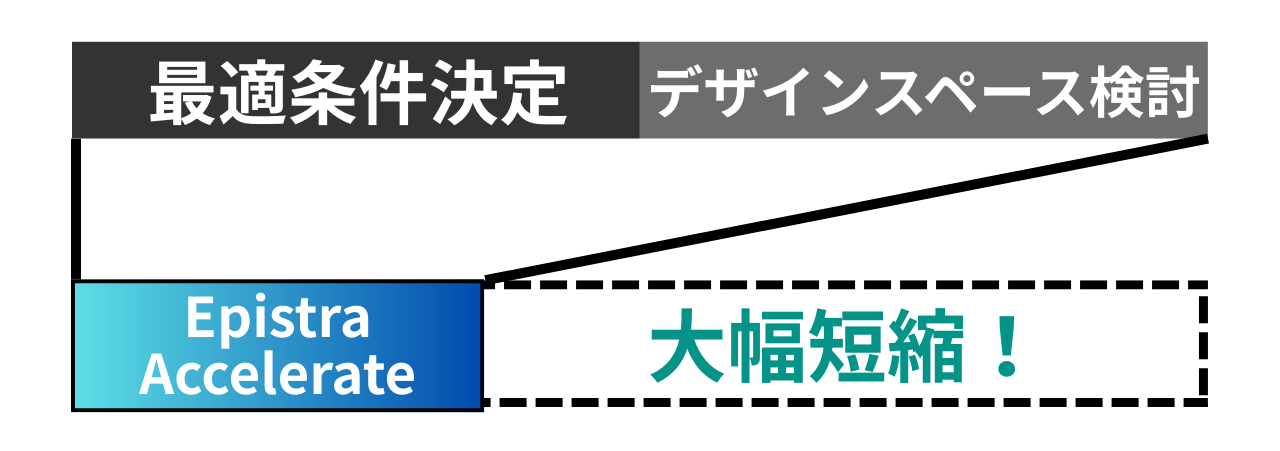
The new “QbD Process Development Function” uses data acquired during optimization to estimate the design space—the acceptable range of parameter variations that maintains quality—simultaneously alongside condition optimization.
Case Study: Joint Research with Astellas Pharma Achieving 50–100x Efficiency Improvement and Design Space Estimation
Joint Research Results Using AI × Robotics Reported at the Japanese Society for Regenerative Medicine
The QbD Process Development Function was actually utilized in joint research with Astellas Pharma Inc., and the results were presented at the 24th Annual Meeting of the Japanese Society for Regenerative Medicine.
In this joint research, we worked on automating and optimizing cell culture processes by combining AI and robotics to explore stem cell culture conditions.
50–100x Improvement in NK Cell Yield in Just 3 Experiments
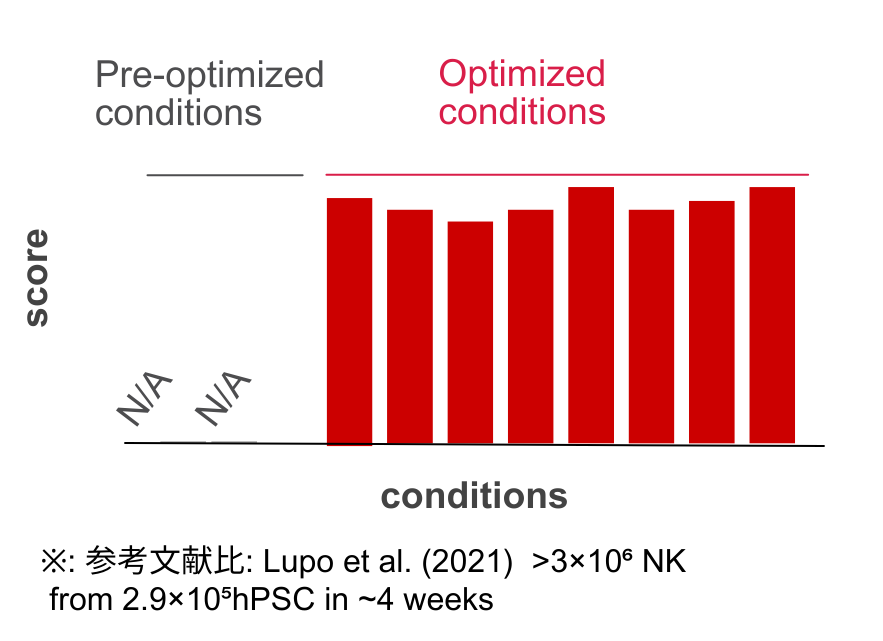
Design Space Estimation
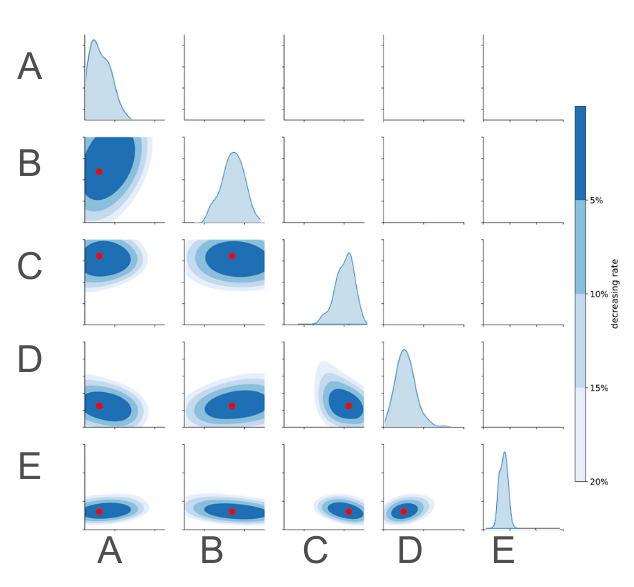
Achievements of the Joint Research
1. Discovered conditions improving differentiation efficiency 50–100x compared to literature data
2. Succeeded in estimating the design space simultaneously with condition exploration (using the QbD Process Development Function)
These achievements were presented at the luncheon seminar of the Japanese Society for Regenerative Medicine and received an enthusiastic response.
Two Solutions Offered by the QbD Process Development Function
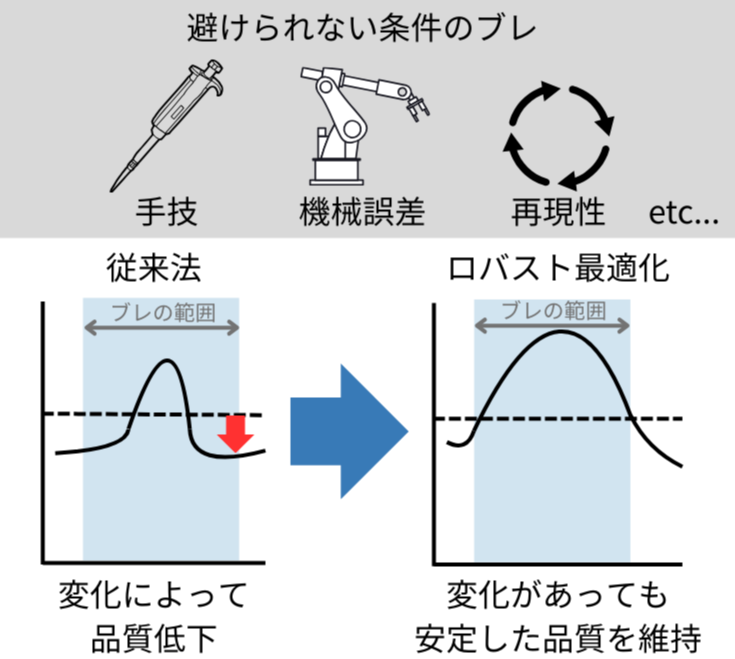
Robust Optimization: AI Searches for Conditions That Maintain Quality Even Under Minor Condition Fluctuations
To discover optimal conditions, “Epistra Accelerate” incorporates a mechanism that focuses exploration on promising regions. Compared to random exploration or conventional Design of Experiments (DoE), it enables more efficient condition optimization in a shorter period.
Furthermore, from the data obtained during optimization, it automatically derives not only the optimal condition but also “robust conditions” that maintain quality even when surrounding parameters fluctuate.
This allows parameters with a high risk of performance variation to be identified and reflected in process design from the early stages of development, enabling robust, QbD-conscious development.
Design Space Visualization: Visualizes Acceptable Ranges for Parameter Variations Using Contour Plots
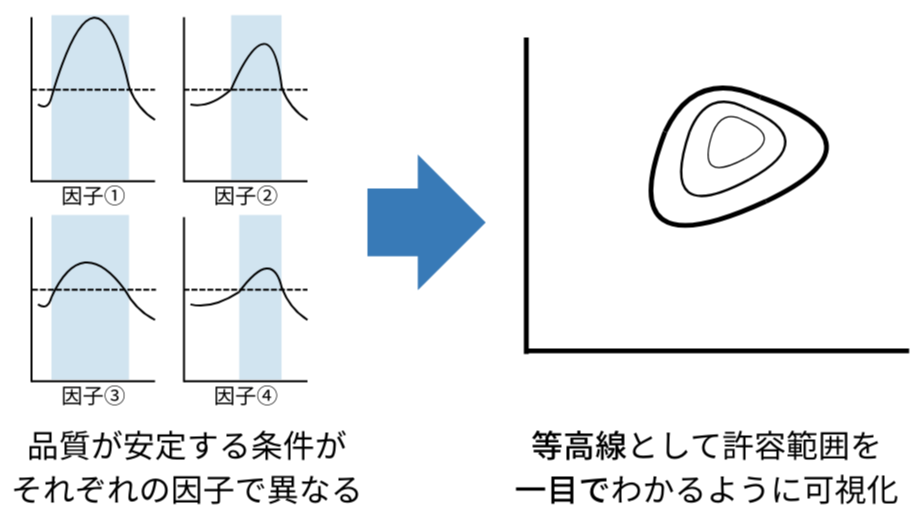
The newly added QbD Process Development Function in “Epistra Accelerate” visualizes acceptable ranges for parameter variations as contour plots based on data obtained during the optimization process.
This makes it possible to grasp the design space—accounting for interactions between parameters—with fewer experiments than conventional methods, enabling an efficient and practical QbD approach from the earliest stages of development.
Related Articles
- Speaking Engagement: CEO Yosuke Ozawa Speaks at the 8th Salon de RINK "Transport and Manufacturing" Special Expanded EditionOn November 20, 2026, Epistra CEO Yosuke Ozawa spoke at the 8th Salon de RINK "Transport and Manufacturing" Special Expanded Edition, hosted by the Kanagawa Regenerative and Cellular Medicine Industrialization Network (RINK).
- Speaking Engagement: CEO Yosuke Ozawa Speaks at the 8th Bio Investment Guild (BIG) Hosted by Miyata Institute of TechnologiesOn November 13, 2026, Epistra CEO Yosuke Ozawa spoke at the 8th Bio Investment Guild (BIG), a members-only program hosted by Miyata Institute of Technologies.
- Epistra Accelerate Receives the FY2026 Tokyo Venture Technology Award Encouragement Award; Epistra Exhibits at Sangyo Koryuten 2026On November 11, 2026, Epistra's experimental condition optimization AI, Epistra Accelerate, received the FY2026 Tokyo Venture Technology Award Encouragement Award. Epistra also exhibited at Sangyo Koryuten 2026.